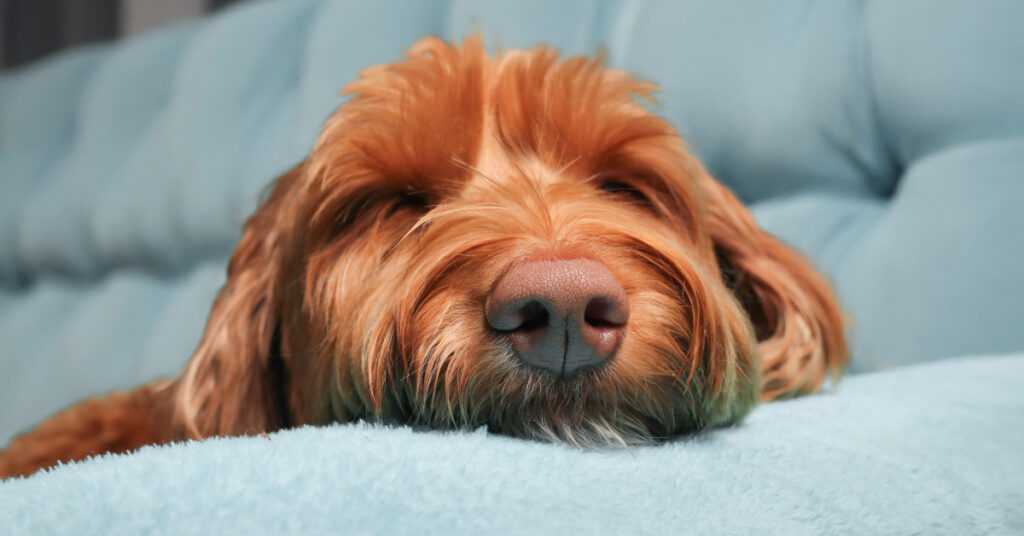
Does your dog snore? You’re not alone. Dog snoring is incredibly common and, for many dogs, it’s a perfectly harmless quirk that provides a bit of background ambiance at bedtime. But dog snoring can also be a symptom of a health issue worth addressing, especially when it’s new, getting louder, or paired with other changes in your dog’s breathing or behavior. Below, we’ll discuss what every dog owner should know about why dogs snore and when it warrants a call to Pet Townsend Veterinary Clinic.
Is It Normal for Dogs to Snore?
Yes, many dogs snore, and for the most part, it’s nothing to worry about. Some dogs snore due to their anatomy, their sleeping position, or seasonal changes in the air. However, dog snoring that develops suddenly, becomes significantly louder, or is accompanied by labored breathing or sleep disruption may deserve a closer look from your veterinarian.
What Causes Snoring in Dogs?
Some causes are completely benign; others point to conditions that benefit from veterinary care.
Breed Anatomy (Brachycephalic Dogs)
If you have a flat-faced breed such as a Bulldog, French Bulldog, Pug, Boston Terrier, Boxer, Shih Tzu, or Cavalier King Charles Spaniel, your dog’s snoring is probably just part of who they are. These breeds are called brachycephalic, meaning they have shortened skull bones that compress the nasal passages, soft palate, and throat. This anatomy makes breathing noisier overall and snoring during sleep almost inevitable.
While snoring in brachycephalic dogs is expected, it’s worth knowing that many of these dogs have a condition called Brachycephalic Obstructive Airway Syndrome (BOAS), which can cause more serious breathing difficulties. If your flat-faced dog snores loudly, struggles to breathe during exercise, or seems to tire easily, a BOAS evaluation at Pet Townsend Veterinary Clinic is a good conversation to have.
Sleeping Position
Sometimes a dog snores simply because of how they’re lying down. When a dog sleeps on their back or curled into a tight position, the soft tissues of the throat can partially obstruct the airway, the same mechanism that causes snoring in people. This type of dog snoring is positional and typically resolves when the dog shifts their body. It’s not a health concern.
Obesity or Excess Weight
Excess body weight is a common cause of dog snoring. When a dog carries extra fat around the neck and throat, it narrows the airway and makes breathing noisier during sleep. If your dog has recently started snoring and has also gained weight, those two things are likely connected. Weight management guided by your veterinarian can often reduce or eliminate weight-related snoring in dogs.
Allergies and Environmental Irritants
Seasonal allergies, dust, mold, smoke, and other airborne irritants can cause nasal congestion in dogs and a congested dog often snores. If your dog’s snoring fluctuates with the seasons or seems linked to a new environment (a new home, a dusty space, or a change in bedding or cleaning products), allergies or environmental irritation may be the culprit.
Upper Respiratory Infection
Dogs with upper respiratory infections like kennel cough, bacterial infections, or other respiratory illnesses often develop nasal congestion and snoring as part of their symptoms. If your dog has started snoring alongside a runny nose, cough, or sneezing, an infection may be behind it. This type of snoring typically resolves as the infection is treated.
Dental Disease or Tooth Abscess
An abscessed tooth root, particularly in the upper jaw, can create drainage into the nasal cavity and cause snoring or nasal discharge. Dental disease is a surprisingly common and underdiagnosed cause of respiratory symptoms in dogs. If your dog’s snoring is new and they also have bad breath or seem reluctant to chew, a dental exam may be in order.
Foreign Body in the Nasal Passage
Dogs are curious animals, and it’s not unheard of for a blade of grass, a seed, or another small object to become lodged in a dog’s nostril. A nasal foreign body can cause sudden snoring, sneezing, nasal discharge, and pawing at the nose. This is a situation that requires veterinary attention.
Nasal Polyps or Tumors
Less commonly, snoring in dogs is caused by a growth in the nasal passages or throat. Nasal polyps, pharyngeal polyps, and tumors can all partially obstruct airflow and cause snoring. These conditions are more likely in older dogs and may be accompanied by progressive worsening, nosebleeds, or facial asymmetry.
When Should You See a Vet About Your Dog’s Snoring?
Many dogs snore their whole lives without it ever being a problem. But certain changes in your dog’s snoring pattern or accompanying symptoms suggest a vet visit is warranted. Contact Pet Townsend Veterinary Clinic if your dog’s snoring is paired with any of the following:
- New or sudden onset of snoring in a dog that didn’t snore before
- Snoring that’s getting noticeably louder or more frequent
- Snoring accompanied by nasal discharge, nosebleeds, or facial swelling
- Labored breathing, noisy breathing while awake, or exercise intolerance
- Coughing, gagging, or sneezing alongside snoring
- Apparent sleep disruption or restlessness during sleep
- Pawing at the nose or face
Frequently Asked Questions About Dog Snoring
Why did my dog suddenly start snoring?
New-onset snoring in a dog that didn’t snore before is more noteworthy than snoring that’s been present since puppyhood. Possible causes include weight gain, a respiratory infection, allergies, a dental abscess, a foreign body in the nose, or a new growth in the airways. Schedule a veterinary exam to identify the cause.
Can I do anything to reduce my dog’s snoring?
In some cases, yes. If your dog’s snoring is related to weight, working with your veterinarian on a weight loss plan may help. Minimizing allergens and irritants in the home (using air purifiers, changing bedding regularly, avoiding scented products) can also reduce congestion-related snoring. For brachycephalic dogs, surgical correction of airway abnormalities is an option in moderate to severe cases.
Is dog snoring a sign of sleep apnea?
Yes, dogs can develop sleep apnea and it’s most common in brachycephalic breeds. Signs of canine sleep apnea include loud, chronic snoring, gasping or choking sounds during sleep, and excessive daytime sleepiness. If you notice your dog repeatedly stopping and restarting breathing during sleep, let your veterinarian know.
How Veterinarians Evaluate Dog Snoring
When a snoring dog comes in for an evaluation at Pet Townsend Veterinary Clinic, your veterinarian will perform a thorough physical exam that includes the nose, mouth, throat, and lymph nodes. Depending on what the exam reveals, diagnostics may include:
- Nasal and oral exam to look for polyps, masses, dental disease, or foreign bodies
- X-rays of the chest, skull, or nasal passages to identify structural problems or masses
- Airway assessment for brachycephalic dogs with suspected BOAS
- Allergy testing or dietary trial if allergies are suspected
Your Dog’s Breathing Deserves Attention
Dog snoring ranges from completely harmless to a symptom worth investigating and the difference usually comes down to context. A lifelong snorer who’s otherwise healthy and comfortable is probably fine. A dog whose snoring pattern has changed, or who seems to be struggling to breathe, deserves a veterinary evaluation. Our team at Pet Townsend Veterinary Clinic in Port Townsend, WA is here to help you sort out what’s normal for your dog and what warrants attention. If you have questions about your dog’s snoring, breathing, or overall respiratory health, call (360) 379-1133 or book an appointment online today.