Hot spots on dogs are one of the most common skin conditions veterinarians treat, and one of the most uncomfortable for the dogs who have them. A dog hot spot can appear almost overnight, rapidly growing from a small red patch to a large, raw, weeping sore. If your dog has been scratching, licking, or chewing at a specific area of their skin, a hot spot may be what’s forming. This blog will explore what you need to know about dog hot spots, what causes them, and how they’re treated at Pet Townsend Veterinary Clinic.
What Is a Hot Spot on a Dog?
A dog hot spot, medically known as acute moist dermatitis, is a localized area of inflamed, infected skin. Hot spots develop when a dog scratches, licks, or chews at an area repeatedly, breaking down the skin’s protective barrier and allowing bacteria to proliferate. The result is a moist, red, painful lesion that can grow quickly and spread if not treated promptly.
Dog hot spots can appear anywhere on the body but are most common on the head, neck, hips, and between the back legs. They’re particularly prevalent in dogs with thick or dense coats, where moisture can become trapped against the skin.
What Causes Hot Spots on Dogs?
Hot spots don’t develop randomly. Something prompts the dog to begin scratching or licking, and the cycle of irritation and infection takes hold from there.
Allergies
Allergies are among the most common underlying causes of hot spots in dogs. Environmental allergies (pollen, dust mites, mold), food allergies, and flea allergy dermatitis (an allergic reaction to flea saliva) can all cause intense itching that leads to a hot spot. Dogs with known allergies are particularly prone to recurring hot spots, especially during allergy season.
Parasites
Fleas, mites, and other external parasites can cause itching intense enough to trigger a hot spot. Even a single flea bite can trigger a significant allergic reaction in a flea-sensitive dog. Regular parasite prevention is one of the most effective ways to reduce hot spot risk. Ask your veterinarian at Pet Townsend Veterinary Clinic about the best parasite prevention options for your dog.
Moisture and Poor Grooming
Moisture trapped against the skin creates an ideal environment for bacteria. Dogs who swim frequently, get caught in the rain, or have dense coats that retain moisture are at higher risk for hot spots. Dogs who aren’t groomed regularly, particularly those with matted fur, are also more vulnerable, since matted coat traps moisture and prevents airflow to the skin.
Anal Gland Problems
Dogs with full, impacted, or infected anal glands often lick and scoot, and some will develop hot spots near the base of the tail or on their hind end as a result. If your dog’s hot spots consistently appear in this area, anal gland issues are worth ruling out.
Boredom, Stress, or Behavioral Causes
Some dogs develop a habitual licking or chewing behavior in response to boredom or anxiety. While this is less common than physical causes, it can lead to hot spots, especially when a dog is left alone for long periods or is experiencing a stressful life change. Addressing the behavioral root cause is an important part of long-term management.
Orthopedic Pain
A dog experiencing pain from arthritis or another orthopedic condition may lick or chew at the area that hurts, eventually creating a hot spot over a painful joint. If your dog’s hot spots consistently appear over a specific joint, especially in an older dog, pain may be an underlying factor.
What Does a Hot Spot Look Like on a Dog?
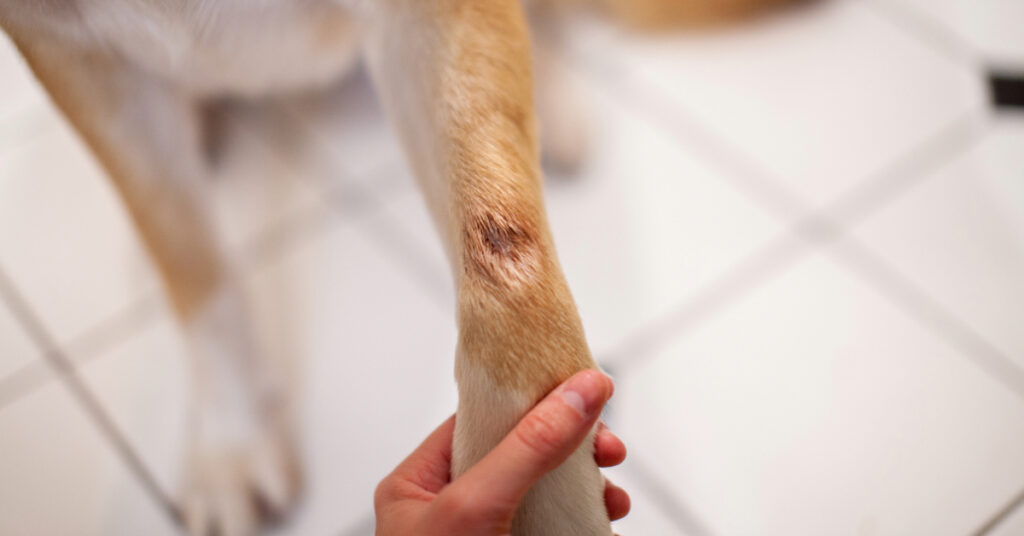
Dog hot spots are hard to miss once they develop. They tend to appear as:
- Red, raw, moist-looking patches of skin
- Areas where the hair is missing or matted down with discharge
- Lesions with oozing, crusting, or a foul odor
- Patches that expand rapidly; sometimes growing significantly within hours
- Areas the dog guards, licks, or pays excessive attention to
Hot spots are typically painful, and many dogs will flinch or snap when the area is touched. If your dog seems to be developing a hot spot, contact Pet Townsend Veterinary Clinic. Early treatment prevents the lesion from spreading and reduces your dog’s discomfort.
How Are Hot Spots Treated?
Treating a dog hot spot requires addressing both the lesion itself and the underlying cause. Without treating what triggered the hot spot in the first place, recurrence is very common. Your veterinarian at Pet Townsend Veterinary Clinic will develop a treatment plan tailored to your individual dog.
Veterinary Treatment of Hot Spots
When a dog hot spot comes in for treatment, your veterinarian will typically clip the hair around the lesion to improve airflow and allow the area to be cleaned and treated properly. The skin is cleaned with an antiseptic solution to remove discharge and surface bacteria. Depending on the severity, treatment may include topical or oral antibiotics to address bacterial infection, anti-inflammatory medications or steroids to reduce swelling and itching, medicated shampoos or sprays to support skin healing, and an Elizabethan collar (E-collar) to prevent the dog from licking the area during healing.
Commonly Asked Questions About Dog Hot Spots
How quickly do hot spots develop?
Dog hot spots are known for developing rapidly. A small area of irritation can turn into a large, oozing lesion within 24 hours. This is one reason prompt veterinary attention is important. Waiting even a day or two can allow the hot spot to spread significantly.
Are hot spots contagious to other dogs or people?
Hot spots themselves are not contagious. They’re caused by a dog’s own bacteria (usually Staphylococcus) proliferating in an irritated area of skin, not by a pathogen that spreads between animals or to people. However, if the underlying cause is fleas or mites, those parasites can spread to other pets.
Which dog breeds are most prone to hot spots?
While any dog can develop a hot spot, breeds with thick, dense, or double coats tend to be most susceptible. Golden Retrievers, Labrador Retrievers, German Shepherds, Saint Bernards, and Rottweilers are among the breeds commonly affected. Dogs with known allergies or a history of skin disease are also at elevated risk.
How can I prevent hot spots on my dog?
Prevention focuses on keeping the underlying triggers under control. Regular grooming, especially in dogs with dense coats, reduces moisture buildup. Year-round flea and parasite prevention is essential for flea-allergic dogs. Managing environmental or food allergies with veterinary guidance reduces overall itch levels. If your dog swims frequently, thoroughly drying their coat afterward is important. Working with your veterinarian to identify and manage the root cause is the most effective long-term strategy.
When to See a Vet for a Dog Hot Spot
Hot spots on dogs rarely improve on their own and without treatment, they typically get worse. Contact Pet Townsend Veterinary Clinic as soon as you notice a potential hot spot forming. Early intervention means less discomfort for your dog, a smaller lesion to treat, and faster healing. Watch for these signs and call your vet promptly:
- A moist, red patch of skin that your dog is paying excessive attention to
- Hair loss or matting in a localized area
- Discharge, crusting, or odor from a skin lesion
- A lesion that seems to be enlarging quickly
- Signs of pain when the area is touched or when your dog moves
Your Dog’s Skin Health Is Worth Taking Seriously
Dog hot spots are painful, fast-moving, and stubborn, but with prompt veterinary care and proper attention to the underlying cause, most dogs recover fully and go on to enjoy comfortable, itch-free skin. The team at Pet Townsend Veterinary Clinic in Port Townsend, WA has extensive experience diagnosing and treating skin conditions in dogs, including hot spots, allergies, and chronic dermatitis. If your dog is scratching, licking, or developing any kind of skin lesion, call (360) 379-1133 or book an appointment online and let us help your dog get comfortable again.